
One Dashboard. Multiple Display Technologies. One Customized Solution.
What makes a vehicle instrument cluster look modern, readable, and well integrated?
It is not always a larger screen.
For motorcycles, electric two-wheelers, three-wheelers, and compact vehicle instruments, the right display often depends on how several technologies work together.
A deep-black monochrome instrument may be ideal for essential speed and battery information. A color TFT LCD may be more suitable for graphics, navigation, and interactive functions. In other applications, combining both display technologies may offer a useful balance between appearance, function, and cost.
Cover-glass treatments, color printing, operating temperature, optical bonding, and electrical integration also influence the final result.
Hunan Future Electronics Technology Co., Ltd. (Future Display) provides customized LCD display solutions for embedded and vehicle instrument applications, with a focus on VA/PMVA monochrome LCDs, color TFT modules, and project-specific display integration.
THE ENGINEERING QUESTION
“Can one display supplier help us combine a black-background instrument, colorful graphics, customized cover glass, wide-temperature performance, and OEM/ODM integration?”
The answer begins by selecting the right technologies for the application, then reviewing how they can be integrated into a reliable and manufacturable display assembly.
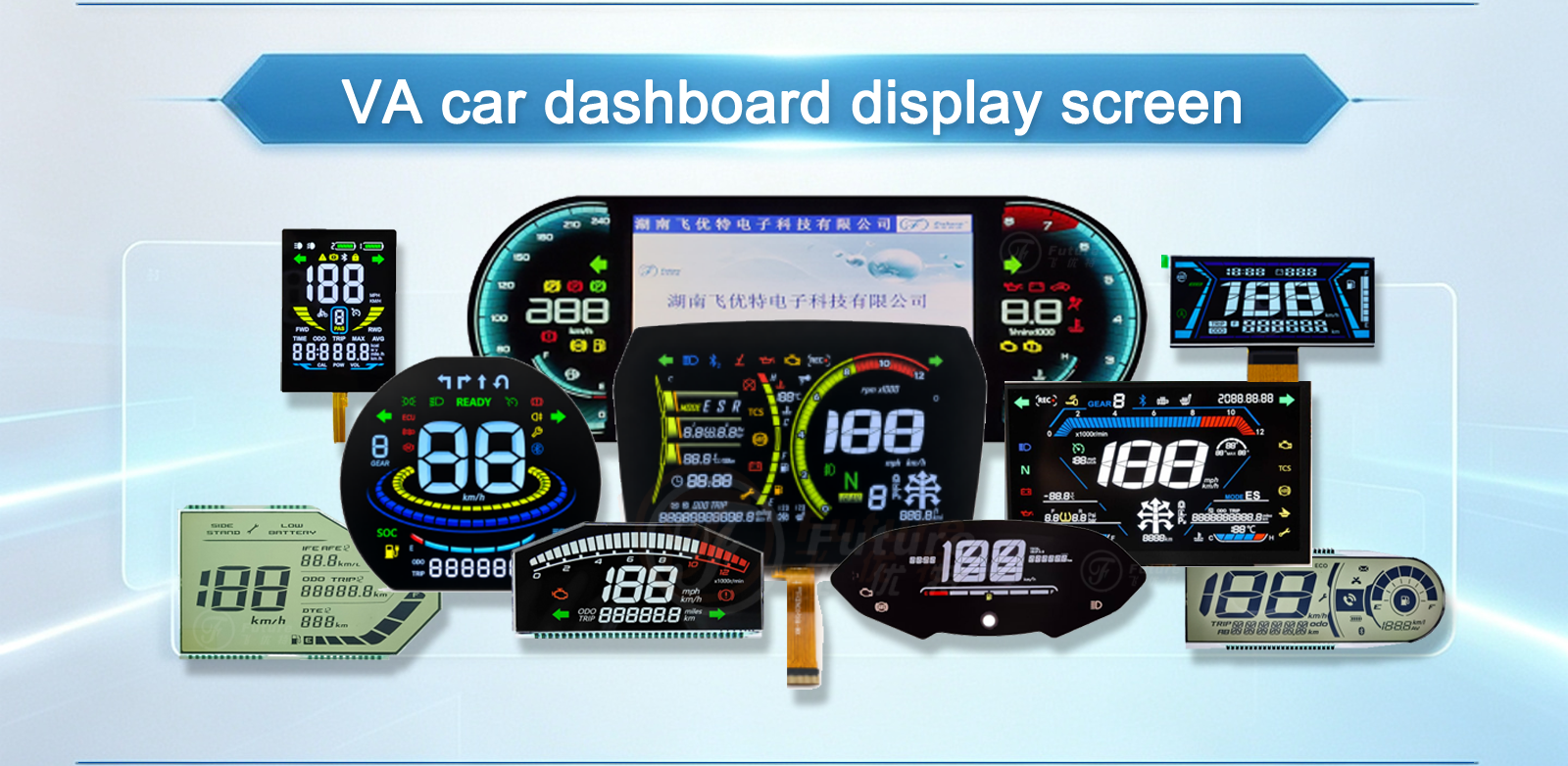
01 | VA and PMVA: Deep-Black Displays for Vehicle Instruments
VA stands for Vertical Alignment, while PMVA refers to Passive-Matrix Vertical Alignment.
These display technologies are well suited to selected instrument applications where a dark background, clear symbols, and strong visual contrast are important.
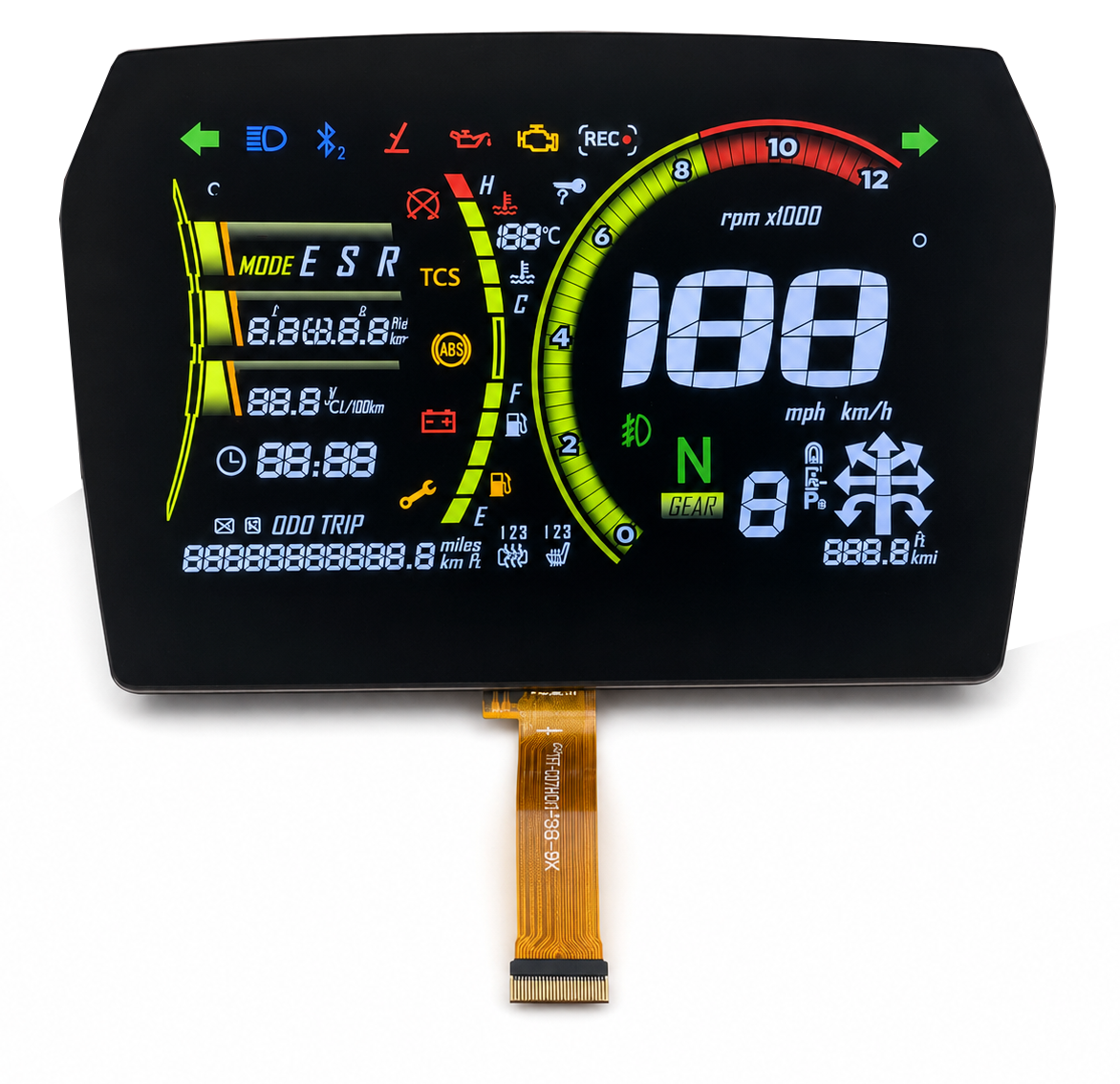
In a suitable negative-mode VA or PMVA design, the display background can appear dark while selected icons, numbers, and segments become visible when illuminated.
This creates the familiar appearance of a modern vehicle instrument panel without requiring a full-color TFT LCD for every function.
01 | DEEP-BLACK BACKGROUND
VA/PMVA technology can support a dark, integrated instrument appearance with clearly defined illuminated symbols.
02 | HIGH-CONTRAST SEGMENT GRAPHICS
Custom segments can display speed, battery level, gear position, status icons, and other fixed instrument information.
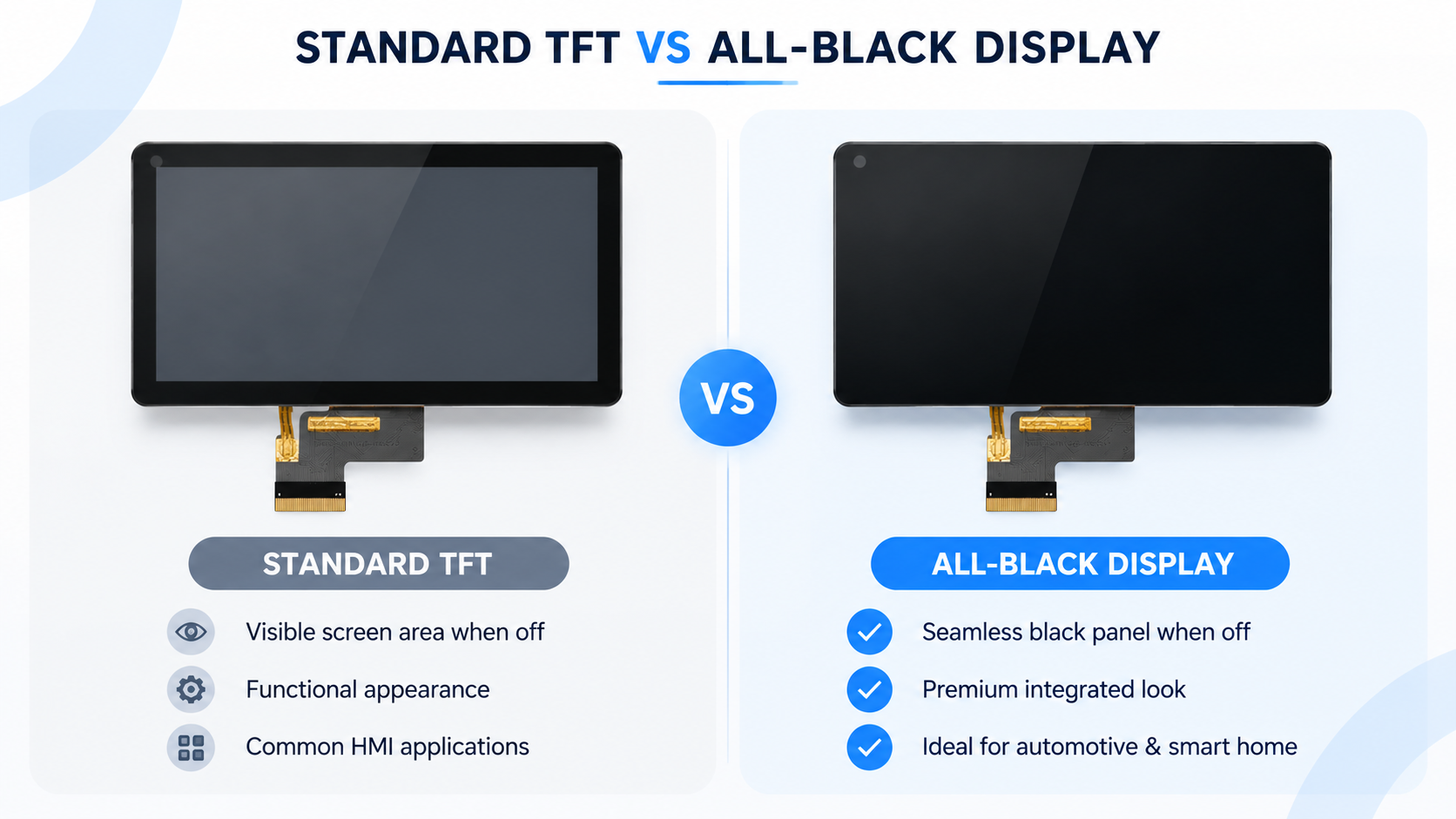
03 | ALL-BLACK / DEAD-FRONT APPEARANCE
A carefully designed front appearance can help hidden or inactive display regions blend into a dark instrument panel.
04 | CUSTOM SYMBOLS AND COLORS
Customized segment artwork, suitable backlighting, and decorative printing can help create a distinctive instrument design.
For vehicle projects, the optical design may also consider viewing angle, background consistency, operating temperature, and color appearance.
However, the achievable contrast ratio, viewing cone, response time, and temperature range depend on the selected VA/PMVA construction and drive method.
Important: VA/PMVA is not automatically equivalent to a full-color graphical TFT LCD. It is especially useful for defined symbols and instrument information.
02 | How Far Can VA/PMVA Display Customization Go?
VA/PMVA customization is not limited to changing the dimensions of a standard LCD.
For a vehicle instrument project, engineers can review the required display artwork, segment layout, illumination, electrical connection, and final assembly.
Possible project considerations include:
- Customized Segments: Speed digits, battery symbols, gear indicators, warning icons, and decorative graphics.
- Background Appearance: Dark-background and All-Black visual design.
- Illumination: Suitable LED backlight color and lighting distribution.
- Viewing Direction: Optimization for the intended rider eye position.
- Mechanical Structure: Glass dimensions, display outline, connection structure, and mounting.
- Electrical Integration: COG or other suitable LCD construction, depending on the project.
CUSTOMER SCENARIO | A PREMIUM BLACK-BACKGROUND MOTORCYCLE METER
A customer wants the display to look almost completely black when it is switched off, but show clear white numbers and colored warning symbols when powered on. Can VA/PMVA help achieve this appearance?
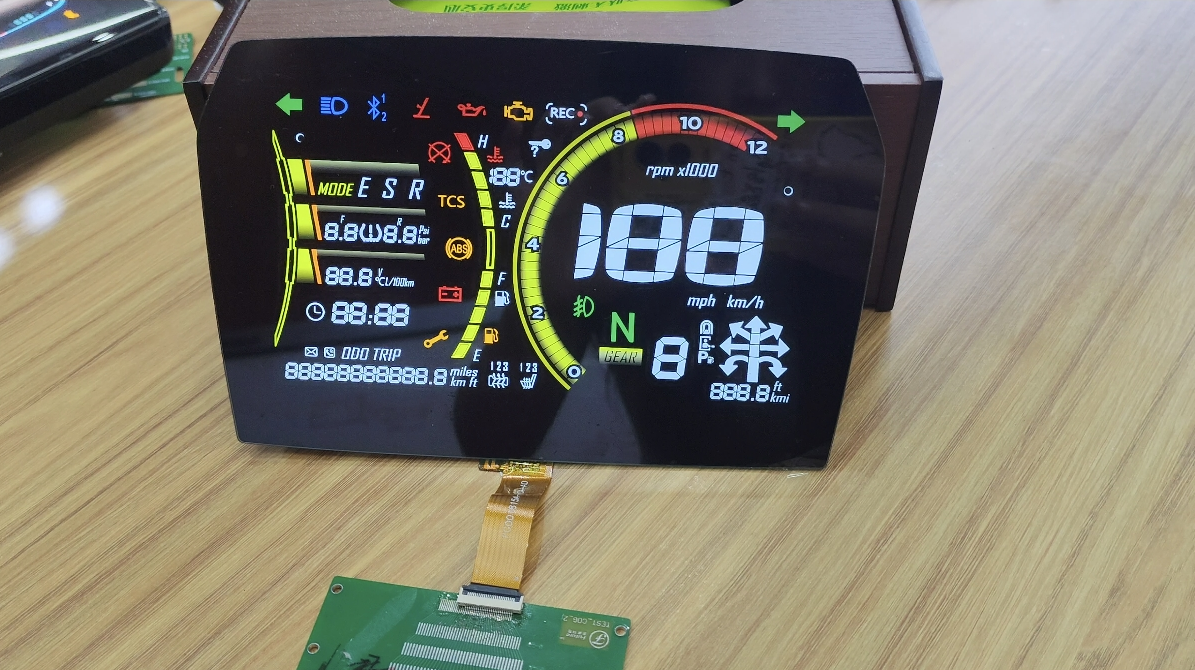
A suitable VA/PMVA display, backlight, icon design, and front-cover structure may support this visual concept.
The final appearance should be evaluated with actual samples, especially for off-state black consistency, backlight uniformity, viewing angle, and printed graphics.
Future Display offers VA COG modules for vehicle and instrument applications. For example, a published VA display configuration specifies an operating temperature range of -30 degrees Celsius to +80 degrees Celsius.
That range is a product-specific example, not a universal rating for every VA display.
03 | AG, AR and AF: Customized Cover Glass for Vehicle Displays
The cover glass is the first part of a display that a rider sees and touches.
Its surface treatment affects glare, reflections, fingerprints, and the overall viewing experience.
Three frequently discussed technologies are AG, AR, and AF.
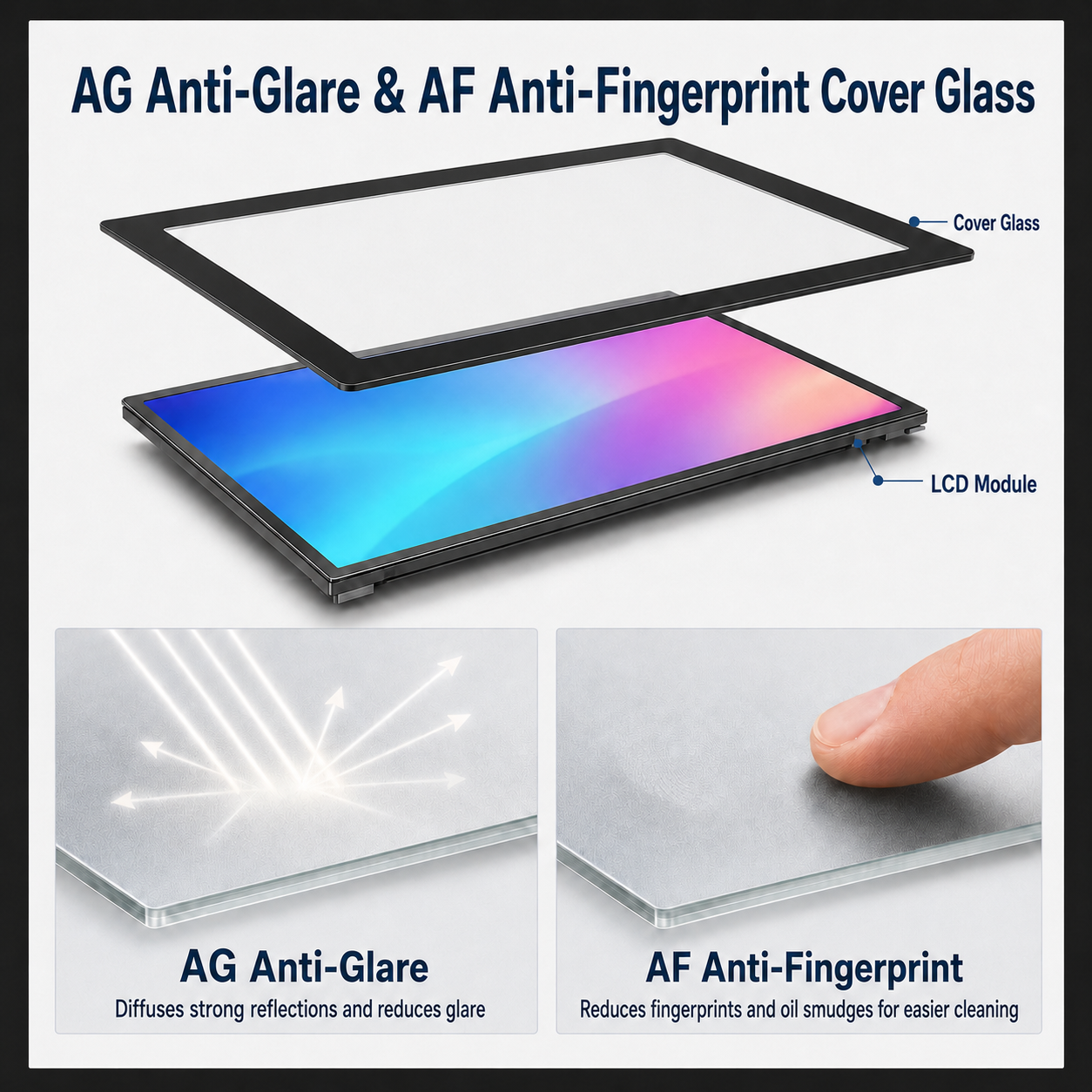
AG | ANTI-GLARE
Uses surface texture or suitable coatings to scatter reflected light and reduce distracting mirror-like glare. Haze, clarity, and sparkle should be evaluated together.
AF | ANTI-FINGERPRINT
Helps reduce fingerprint smudging and makes regular cleaning easier. Abrasion resistance and cleaning-agent compatibility are important considerations.
AR | ANTI-REFLECTION
Uses optical coating design to reduce surface reflectance over specified wavelengths and viewing conditions. Target reflectance, durability, and manufacturing feasibility must be defined.
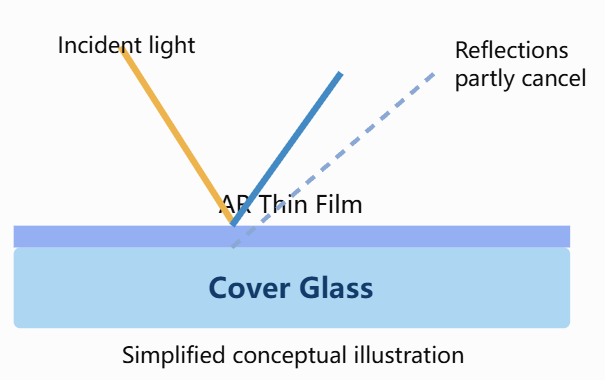
AG, AR, and AF are different technologies. They may be combined in compatible cover-glass designs, but additional coatings do not automatically guarantee better optical performance.
Future Display can review AG and AF requirements for suitable cover-glass projects. Specific AR coating requirements should be assessed for technical and production feasibility.
Other cover-glass requirements may include outline dimensions, glass thickness, edge finishing, logo printing, black borders, and touch integration.
04 | Color Screen Printing and Gradient Decorative Finishes
A vehicle instrument display is also an important part of product identity.
Manufacturers may want their dashboard glass to include brand colors, decorative patterns, special borders, or a smooth transition between the display window and the surrounding housing.
Customized printing and decorative surface treatments can help support these design goals.
01 | MULTI-COLOR SCREEN PRINTING
Custom colors may be used for logos, borders, labels, instrument markings, and decorative glass regions, subject to artwork and process review.
02 | GRADIENT DECORATIVE EFFECTS
Gradient-color or gradient-opacity concepts can be reviewed using suitable decorative printing or spraying approaches, subject to process capability and sample validation.
03 | CUSTOM LOGOS AND BLACK BORDERS
Brand artwork, border shapes, printed text, and display-window definitions can be reviewed as part of cover-glass customization.
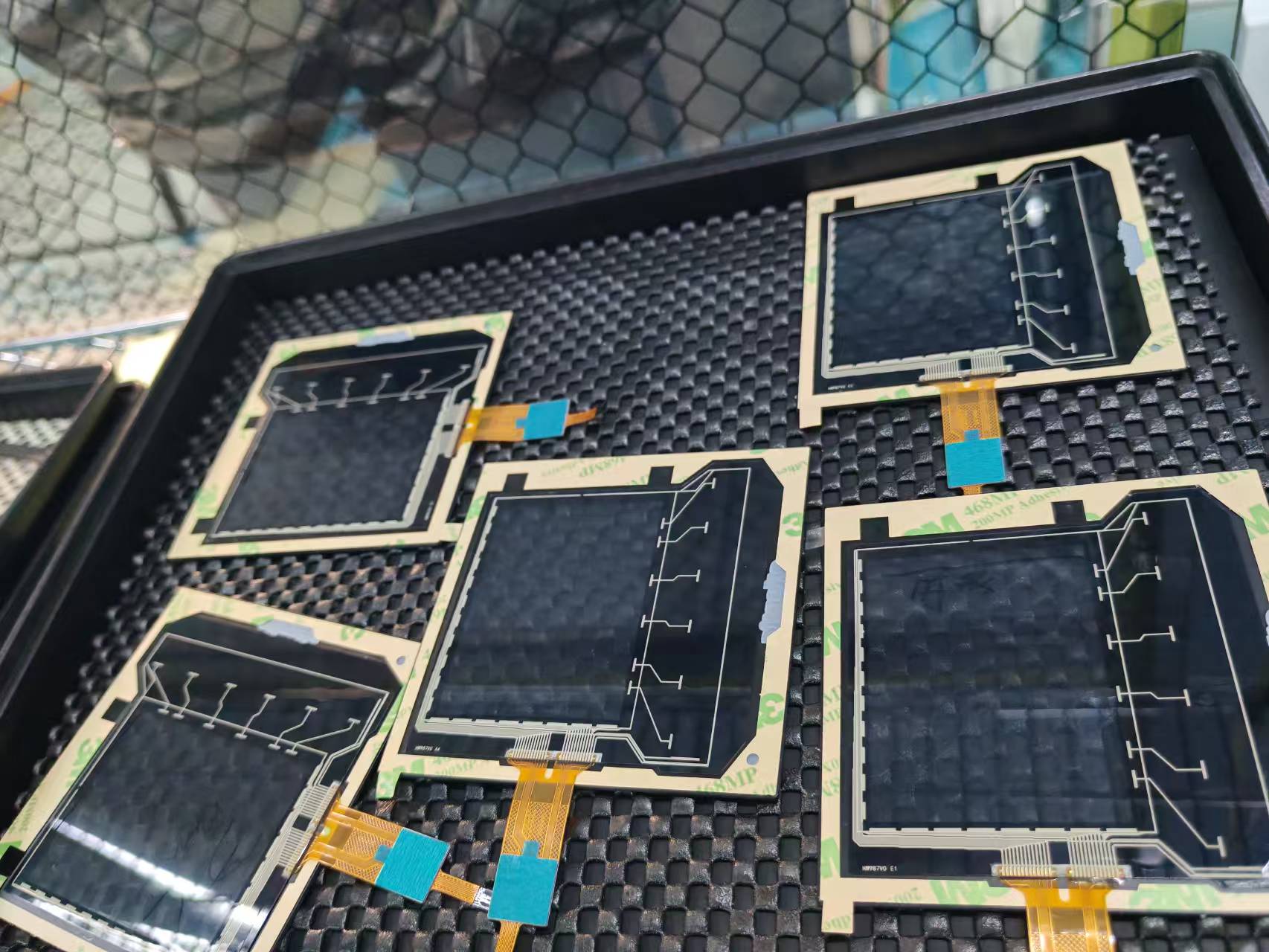
CUSTOM LOGOS AND BLACK BORDERS
04 | DEAD-FRONT VISUAL INTEGRATION
A coordinated design of dark printing, optical transmission, display appearance, and illumination can help create a cleaner off-state front panel.
CUSTOMER SCENARIO | A BRAND-SPECIFIC MOTORCYCLE DASHBOARD
A vehicle manufacturer wants a dark instrument panel with a colored logo, custom icon artwork, and a gradual decorative transition around the active display area. What information should be supplied for development?
The design team should provide the required artwork, color references, cover-glass dimensions, target appearance, and expected environmental conditions.
Actual printing or spraying methods, color matching, optical transmission, adhesion, durability, and production capability should be confirmed during project review.
Engineering Insight: Decorative design and optical performance should be evaluated together. An attractive printed finish must not interfere with the readability of essential instrument information.
05 | High-Brightness Color TFT LCDs for Motorcycle Dashboards
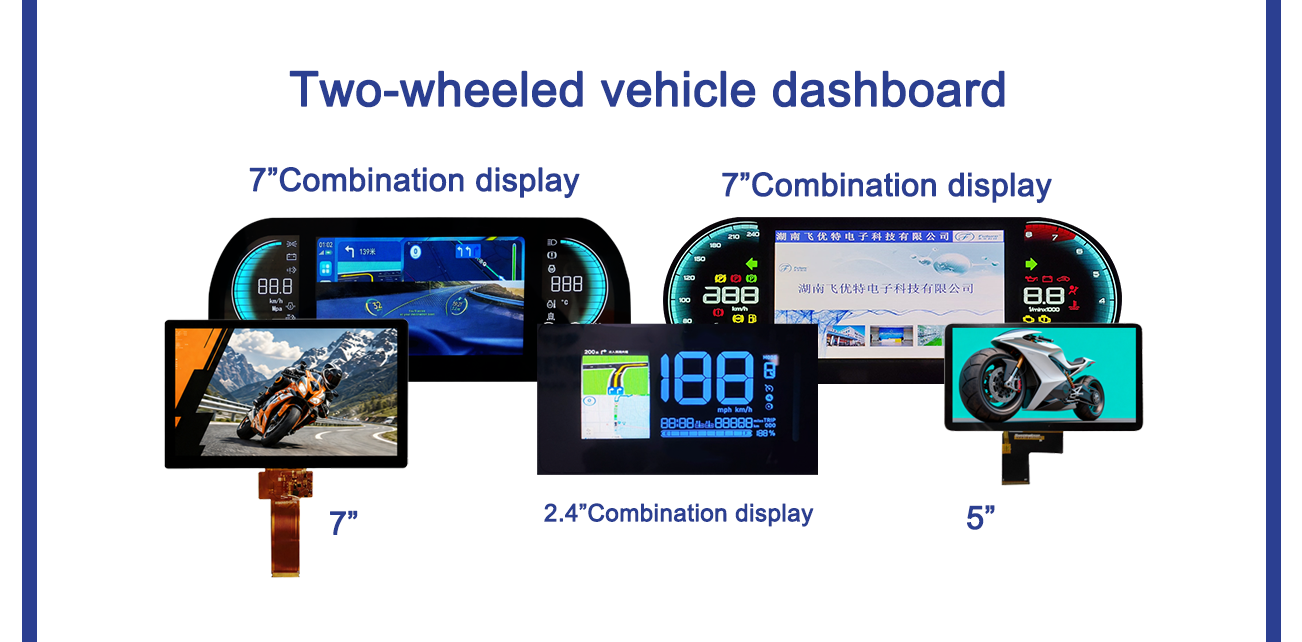
For applications requiring navigation graphics, multiple information pages, animation, or interactive functions, color TFT LCD technology provides additional display flexibility.
Future Display offers small and medium-sized TFT LCD platforms for industrial and two-wheeler applications.
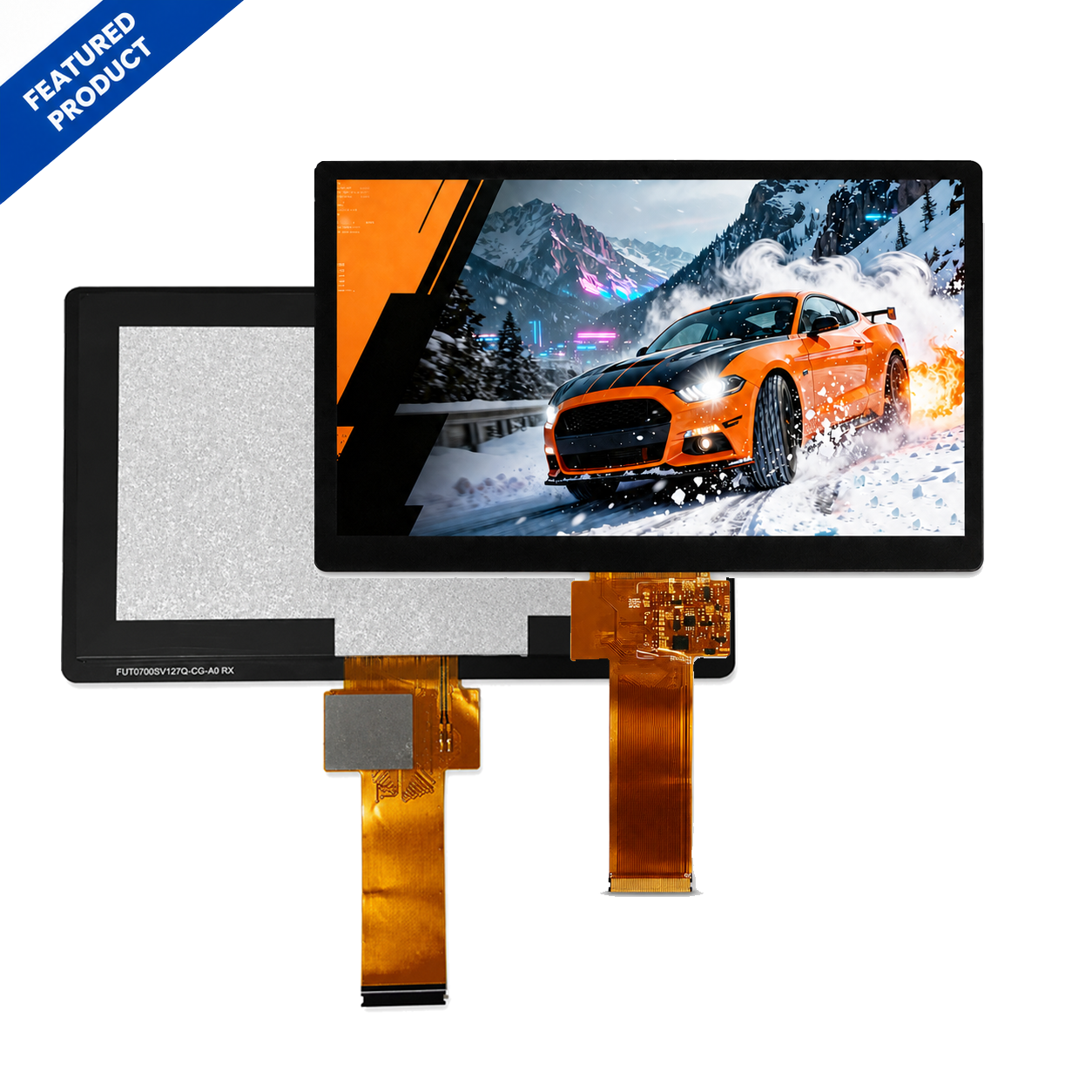
One published motorcycle display example is the FUT0700SV127Q-ZC-A0.
7.0-Inch Motorcycle TFT LCD | FUT0700SV127Q-ZC-A0
Display Size: 7.0 inches
Resolution: 1024 x 600
Display Technology: IPS TFT LCD
Brightness: 1000+ nits
Interface: RGB 24-bit
Operating Temperature: -30 to +85 degrees Celsius
Storage Temperature: -40 to +90 degrees Celsius
Application: Motorcycle and two-wheeler instrument clusters
These specifications describe this display platform. Other models may have different electrical, optical, and temperature ratings.
Future Display has also published a 5-inch, 1350-nit TFT display case study for two-wheeler instrument applications, illustrating another high-brightness display direction.
Brightness should not be evaluated in isolation. Display contrast, surface reflections, cover glass, optical bonding, and viewing angle also influence outdoor readability.
Explore the 5-Inch High-Brightness TFT Case Study
06 | Wide-Temperature TFT LCDs: Designed for Different Riding Conditions
A motorcycle display may operate during a cold morning start and later experience elevated temperatures when the vehicle is parked in sunlight.
For these applications, wide-temperature performance is important.
Selected Future Display motorcycle TFT platforms support an operating range of -30 degrees Celsius to +85 degrees Celsius, depending on the model.
However, operating temperature and storage temperature are different specifications.
| Specification | Meaning |
|---|---|
| Operating Temperature | The specified temperature range for operation under defined conditions. |
| Storage Temperature | The specified temperature range for storage without powered operation. |
| Environmental Validation | Testing that evaluates performance against agreed project conditions and acceptance criteria. |
Temperature can influence liquid crystal response, backlight performance, optical adhesives, mechanical materials, and electronic components.
Therefore, engineers should consider the complete display assembly and its installation environment rather than relying on one temperature number alone.
ENGINEERING INSIGHT
A wide operating-temperature rating must be verified for the selected LCD module. Storage limits, component material limits, and special development targets should not be presented as equivalent to a validated operating specification.
07 | Monochrome + Color: Combination Instrument Display Solutions
Not every vehicle instrument needs to choose between a monochrome LCD and a color TFT display.
For selected projects, a combined instrument design can use different display technologies for different functions.
For example, a monochrome VA/PMVA region may present speed, battery status, and essential fixed indicators, while a color TFT region provides graphics, menus, or other dynamic information.
VA / PMVA MONOCHROME AREA
Suitable for selected fixed symbols, high-contrast numbers, status indicators, and dark-background instrument designs.
COLOR TFT AREA
Suitable for graphical interfaces, navigation-style information, changing menus, and full-color content.
COMBINED FRONT ASSEMBLY
A project may use a coordinated cover-glass design, display arrangement, optical treatment, and mechanical structure to integrate both visual areas.
This concept can help engineers allocate display functions according to their actual requirements.
Depending on the project, a combined solution may involve two separate display modules integrated into one instrument assembly or another technically suitable structure.
Important: A combined monochrome-plus-color instrument should not be confused with a single LCD panel that automatically supports both technologies. Electrical, mechanical, optical, and production feasibility must be reviewed.
08 | OCA Optical Bonding, Touch Integration and Custom Interfaces
Display customization goes beyond the visible screen surface.
The final instrument also needs to fit the customer’s electronics, enclosure, assembly process, and operating environment.
Future Display can review several integration requirements for suitable projects.
01 | OPTICAL BONDING
OCA or other suitable optical bonding methods may reduce selected internal air interfaces and improve the integration of cover glass, touch components, and LCD modules.
02 | TOUCH PANEL INTEGRATION
Capacitive or resistive touch options can be reviewed according to the selected display, environmental requirements, and host system design.
03 | FPC AND CONNECTOR CUSTOMIZATION
Flexible circuit length, direction, connector position, and pin requirements may be reviewed to fit the customer’s existing PCB.
04 | DISPLAY INTERFACE MATCHING
RGB, LVDS, MIPI, and other interfaces may be available across different display platforms. Compatibility must be confirmed for the selected model.
For motorcycle instrument projects, suitable display integration can reduce unnecessary mechanical or electrical redesign.
The final design should be evaluated against the customer’s drawings, electronics, required functions, and production requirements.
09 | Reliability Engineering for Vehicle Display Modules
Vehicle display modules must be evaluated for more than attractive appearance and initial brightness.
Real-world applications can involve changing temperatures, humidity, vibration, electrical interference, and prolonged sunlight exposure.
Appropriate project validation may include:
- High- and Low-Temperature Testing: Evaluating display operation under the specified environmental range.
- Thermal Cycling: Reviewing repeated temperature-change effects.
- Humidity Exposure: Evaluating moisture-related material and assembly risks.
- Vibration and Mechanical Testing: Reviewing the effects of the vehicle installation environment.
- ESD Evaluation: Assessing electrostatic-discharge requirements.
- UV and Weathering Evaluation: Reviewing optical materials and surface treatments where required.
- Optical Inspection: Reviewing brightness, uniformity, contrast, visible defects, and display appearance.
- Electrical and Functional Testing: Confirming the relevant display functions against project requirements.
Test methods, conditions, durations, and acceptance criteria should be defined for the specific project.
These are possible engineering evaluations, not a statement that every Future Display module has passed every listed test.
10 | Future Display OEM/ODM: From Concept to Display Integration
Future Display has supported LCD manufacturing and customized display development since 2005.
Our product capabilities cover monochrome LCDs, VA/PMVA display solutions, TFT LCD modules, touch integration, and project-dependent display customization.
For suitable OEM/ODM programs, the engineering review can cover:
- Display technology selection: VA, PMVA, monochrome LCD, or color TFT.
- Custom segment artwork and instrument graphics.
- Cover-glass dimensions, printing, and appearance requirements.
- AG and AF surface treatment requirements.
- AR and gradient decorative process feasibility evaluation.
- Brightness, viewing angle, and operating-temperature requirements.
- Optical bonding and touch integration.
- FPC, connector, and interface adaptation.
- Mechanical structure and combined display layouts.
- Sample development, technical evaluation, and mass-production planning.
Whether the project requires a compact VA speedometer, a high-brightness color TFT dashboard, or a combined monochrome-and-color instrument, the objective is to select a manufacturable solution that matches the customer’s actual needs.
11 | Frequently Asked Questions
Q1. Can VA/PMVA LCDs create an all-black instrument appearance?
Suitable negative-mode VA/PMVA designs can provide dark backgrounds and illuminated segments. Off-state black consistency depends on the complete optical and cover-glass structure.
Q2. Can a motorcycle cover glass use AG, AR and AF together?
Compatible surface treatments can be evaluated together. Future Display can review AG and AF options, while specific AR combinations require engineering and supplier confirmation.
Q3. Can colored logos and gradient effects be customized?
Color screen printing, logo artwork, and decorative design requirements can be reviewed. Gradient effects and the applicable production process require sample and manufacturing-feasibility evaluation.
Q4. How wide is the operating-temperature range of a motorcycle TFT LCD?
Selected Future Display motorcycle TFT platforms specify -30 degrees Celsius to +85 degrees Celsius operation. Other models may have different temperature ratings.
Q5. Can a VA monochrome display and a color TFT be combined?
Such an instrument concept can be evaluated using suitable display modules and a coordinated mechanical, optical, and electrical design. Final feasibility depends on the project.
Q6. Can Future Display customize the FPC to match an existing PCB?
FPC direction, length, connector position, and pin requirements can be reviewed for suitable display platforms, subject to electrical and mechanical compatibility.
Q7. Does a 1000-nit TFT LCD guarantee sunlight readability?
No. Outdoor visibility also depends on reflections, display contrast, cover glass, optical bonding, and viewing conditions.
Q8. Does Future Display support OEM/ODM manufacturing?
Yes. Future Display supports project-based LCD customization and module integration, from requirements review and sample development to production planning, subject to approved technical specifications.
12 | RFQ: Discuss Your Custom Vehicle Display Project
Are you developing a new motorcycle instrument cluster, electric two-wheeler dashboard, or compact vehicle display?
Share your requirements so Future Display can review suitable technologies and integration options.
Custom Vehicle LCD | RFQ Checklist
- Application: Motorcycle / E-Bike / Three-Wheeler / Instrument Panel.
- Display Technology: VA / PMVA / TFT / Monochrome + Color Combination.
- Display Size: Required dimensions and resolution.
- Instrument Artwork: Segment layout, icons, logo, and graphical requirements.
- Appearance: All-Black / Color Printing / Gradient Design.
- Cover Glass: AG / AF / AR Requirement for Evaluation.
- Brightness: Required luminance and viewing environment.
- Temperature: Required operating and storage conditions.
- Touch: Capacitive / Resistive / No Touch.
- Bonding: OCA / Alternative Optical Bonding / Air Gap.
- Connection: Interface, FPC, connector, and pin requirements.
- Reliability: Applicable environmental and testing requirements.
- Reference Documents: Drawings, artwork, photos, or existing datasheets.
- Purchasing Plan: Prototype quantity, estimated annual volume, and timeline.
Request an OEM/ODM Engineering Review
Email: info@futurelcd.com
Online Inquiry: Contact Future Display
Tell us what your instrument needs to display, how it should look, and where it will operate. Our team can help review a suitable LCD technology and customization direction.
13 | Continue Learning: Technologies Behind Better Vehicle Displays
Vehicle displays combine several optical, electrical, mechanical, and material technologies. Explore these related topics to understand how individual design choices affect final performance.
01 | AG, AR AND AF COVER GLASS
Understand the differences between glare reduction, reflectance control, and fingerprint resistance.
02 | LCD VIEWING ANGLES AND OPTICAL FILMS
Learn why display colors and contrast can change at an angle, and how optical compensation helps manage selected viewing-angle effects.
03 | WIDE-TEMPERATURE TFT LCDS
Explore why cold starts, heat, liquid crystal response, and backlight behavior matter for outdoor vehicle instruments.
04 | HIGH-BRIGHTNESS MOTORCYCLE TFT LCDS
See how backlight brightness, optical structure, power consumption, and thermal conditions influence outdoor display design.
Conclusion | Vehicle Display Customization Goes Beyond the LCD Panel
A successful motorcycle or compact vehicle instrument cluster is not defined by display size alone.
VA/PMVA technology can support deep-black instrument designs and customized symbols. Color TFT modules provide more flexible graphical interfaces. AG, AR, and AF cover-glass treatments address different optical and surface requirements, while decorative printing and mechanical integration support the final appearance.
For suitable applications, monochrome and color display modules can also be evaluated together as part of a customized instrument assembly.
The right vehicle display is not necessarily the most complicated design. It is the solution that matches the required information, environment, appearance, reliability, and manufacturing plan.
Future Display | Custom VA/PMVA, TFT LCD and OEM/ODM Display Solutions
Post time: Nov-27-2026


