
Who Pays for a Cheap Display Supplier? Usually Engineering.
The Hidden Cost of Low-Price LCD and TFT Sourcing
A low display price looks attractive on a quotation.
It is easy to compare.
It is easy to report.
It is easy to put into Excel.
But here is the uncomfortable question:
What if the cheapest display supplier is actually creating the highest total project cost?
Not because the screen itself is expensive.
Because everything around it becomes expensive.
More debugging.
More emails.
More meetings.
More sample rounds.
More redesign.
More rework.
More waiting.
And sometimes, a delayed product launch.
That is why the cheapest display is not always the lowest-cost choice.
Procurement Saves $2. Engineering Loses Two Weeks.
Imagine a 5-inch TFT project.
Supplier A is $2 cheaper per unit.
Supplier B costs slightly more.
On paper, Supplier A wins.
Then the sample arrives.
The FPC does not match the customer’s development board.
The connector position creates interference.
The brightness looks acceptable in the office but is not enough inside the final enclosure.
The engineer starts checking the PCB.
Another engineer joins.
Purchasing asks the supplier for clarification.
The supplier asks for more drawings.
A new FPC needs to be reviewed.
Another sample is produced.
Two weeks disappear.
Was the display really $2 cheaper?
Or did the company simply move the cost from purchasing to engineering?
The Most Expensive Person in the Project May Be the Customer’s Engineer
This is where low-price sourcing becomes more complicated.
Companies can spend a lot of effort negotiating a few dollars off a component, then use highly skilled engineers to solve the problems caused by that decision.
A hardware engineer should be working on the product.
Not spending days explaining a connector definition.
A mechanical engineer should be improving the enclosure.
Not redesigning it because the module structure was not reviewed early enough.
A project manager should be moving toward pilot production.
Not chasing another sample.
These hours rarely appear on the supplier quotation.
But they are still part of the project cost.
“We Support Customization” Does Not Always Mean Real Engineering Support
Many display suppliers say they support customization.
But there is a big difference between:
“Send us your drawing.”
and:
“Let’s review whether this structure, interface, FPC, cover glass and backlight actually fit your product.”
Real project support starts before the problem appears.
A capable supplier should be asking:
Does your board support this interface?
Where is the connector located?
What direction should the FPC exit?
What thickness can the enclosure accept?
Is the product used indoors or outdoors?
Do you need AG or AF cover glass?
What is the operating temperature?
Does the display need touch?
What reliability requirements should be verified before mass production?
Future’s Industrial TFT Display Solutions are built around this type of project-level review, including display, touch, cover glass, backlight, FPC and interface support. The page also states that FPC routing and signal connection can be adapted according to the customer’s enclosure and electrical design.
That is more than selling a TFT module.
It is reducing integration risk.

A Cheap Supplier Can Become Expensive Through Communication Alone
Communication is one of the most underestimated costs in B2B manufacturing.
Suppose every technical question takes three days to answer.
Suppose sales cannot understand the issue and only forwards messages.
Suppose engineering receives incomplete information.
Suppose the customer has to explain the same requirement three times.
Nothing is technically “broken.”
But the project is slowing down.
Now compare that with a supplier where the salesperson understands enough to identify:
Is this a mechanical issue?
An interface issue?
An optical issue?
A touch issue?
A reliability issue?
A production issue?
Good communication reduces repeated emails and unnecessary internal meetings.
That has economic value.
Professional sales support is not just about being polite or responsive.
It can reduce the workload of the customer’s engineering, purchasing and project teams.
The Lowest Quote Can Become the Most Expensive When Launch Timing Matters
This is where the real risk appears.
Many products are developed around a fixed launch schedule:
A trade show.
A seasonal sales window.
A vehicle launch.
A distributor launch.
A customer delivery deadline.
A new model release.
If the display sample is delayed, the next stage may also be delayed:
PCB validation
Mechanical assembly
Software debugging
Reliability testing
Certification
Pilot production
Mass production
Product launch
The display may be only one component.
But one delayed component can affect the whole project.
This is why time-to-market should be treated as part of sourcing cost.
Purchase Price Is Easy to Measure. Delay Cost Is Not.
This is probably why companies focus so heavily on unit price.
Unit price is visible.
Delay cost is harder to calculate.
Engineering cost is harder to calculate.
Communication cost is harder to calculate.
Rework risk is harder to calculate.
Supplier responsiveness is harder to calculate.
But “hard to measure” does not mean “not real.”
A project delayed by four weeks can easily cost more than the savings gained from choosing a slightly cheaper display.
Rework Is One of the Most Expensive Hidden Costs
A display can look perfect on a datasheet and still become a problem inside the final equipment.
For example:
The FPC exits in the wrong direction.
The module is thicker than expected.
The cover glass interferes with the housing.
The touch structure changes the stack height.
The connector is not where the PCB expects it.
The brightness is insufficient under real ambient light.
If these problems are discovered early, they are manageable.
If they are discovered after the PCB, enclosure and tooling are finalized, they become redesign problems.
And redesign is expensive.
This is why early integration review matters.
Reliability Testing Is Not a “Quality Show.” It Is Cost Control.
A sample may work perfectly on a desk and still fail in the final product.
Temperature.
Humidity.
ESD.
Impact.
Vibration.
Long operating hours.
Different lighting environments.
These are all conditions that can expose weaknesses later.
Future’s article on Display Reliability Testing Before Mass Production explains why reliability testing should be defined according to the actual application, including temperature, humidity, ESD, impact and other requirements.
That matters because a problem found during sample validation is usually cheaper than the same problem found after thousands of units have shipped.
Testing is therefore not only about proving quality.
It is about reducing future cost.
Supplier Response Time Has a Cost Too
Imagine two responses to the same technical issue.
Supplier A says:
“Please check your PCB.”
Supplier B says:
“Please send us your PCB drawing, connector definition and startup waveform. We will review it with engineering.”
The second supplier is doing more work.
But the customer may save several days of internal troubleshooting.
That is the kind of value that does not appear on the BOM.
Yet it can make a real difference to the project schedule.
Mass-Production Stability Is Part of the Price
The first sample is only the beginning.
The real test starts when the project moves into repeat production.
Customers need to know:
Will the brightness remain consistent?
Will the FPC remain unchanged?
Will the approved materials stay stable?
Can the factory maintain delivery?
Can a batch be traced if something goes wrong?
Will the supplier still respond after the order becomes routine?
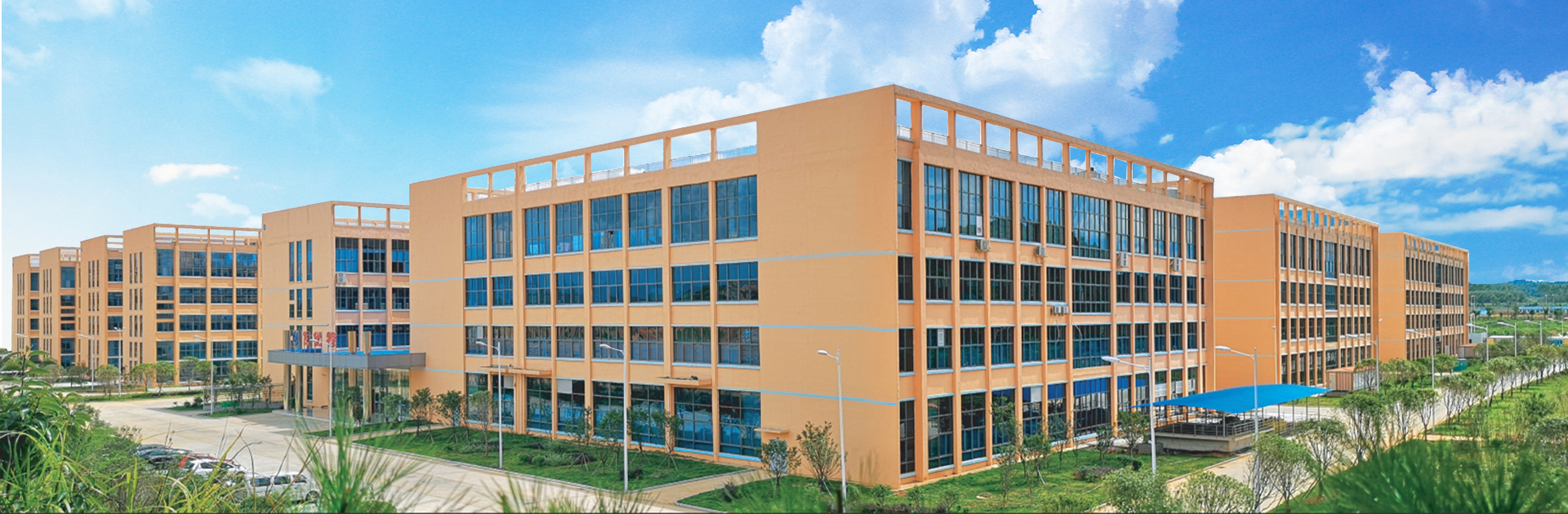
Future’s Factory Workshops page shows LCD production, LCM and backlight workshops, TFT LCM production, COG production and automated inspection capability.
That matters because supplier value does not end when the first sample works.
It has to continue through repeat production.
The Real Question Is Not “Who Is Cheapest?”
The better question is:
Which supplier creates the least total friction?
That includes:
Unit Price
Engineering Workload
Communication Time
Sample Speed
Rework Risk
Quality Risk
Delivery Stability
Change Response
Mass-Production Consistency
Time-to-Market
That is much closer to the real cost of a B2B display project.

The Real Project Cost Equation
A more realistic way to look at display sourcing is:
Unit Price
- Engineering Time
- Communication Cost
- Sample Cost
- Debugging Cost
- Rework Cost
- Testing Cost
- Delay Cost
- Quality Risk
- Supply Risk
= Real Project Cost
This is why a supplier that is slightly more expensive can still be the lower-cost partner overall.
Here Is the Most Uncomfortable Part
Sometimes procurement gets rewarded for reducing component cost.
Engineering gets blamed for delays.
Quality gets blamed for failures.
Sales gets blamed when the launch date moves.
But all of these problems may come from the same supplier decision.
That is why sourcing cannot be viewed as a purchasing-only activity.
It is a cross-functional decision.
The “cheapest” supplier is only truly the cheapest if the company still wins after engineering time, quality risk, production stability and launch timing are included.
Otherwise, the low price is simply moving cost from one department to another.
From a Factory Perspective
At Future, we know our quotation may not always be the lowest.
And we do not believe every customer should automatically choose us.
If a project is completely standard, volume is extremely high, engineering support is not important and price is the only KPI, another supplier may genuinely be a better fit.
But if the project involves:
Custom FPC
Interface matching
High brightness
Cover glass
Touch integration
Wide temperature
Reliability testing
Small-batch development
Multiple sample rounds
Long-term supply
then the conversation should probably be bigger than unit price.
Because the real cost is not only the LCD.
The real cost is everything that happens around the LCD.
What Does a “More Expensive” Supplier Actually Include?
Sometimes the extra value behind a quotation is invisible.
It may include:
Faster technical response
More experienced sales communication
Better sample preparation
FPC and connector checking
Change-management support
Reliability verification
Production control
Traceability
Problem ownership
Future’s public FAQ also states that the company warranties its materials and workmanship and emphasizes resolving customer issues whether they are in warranty or not.
That kind of responsibility is difficult to write into one unit-price number.
But it affects the customer experience when something goes wrong.
Maybe “Cheap” Is the Wrong KPI
The display industry spends a lot of time discussing:
Price.
Resolution.
Brightness.
Interface.
MOQ.
Lead time.
But maybe the better KPI is:
How much trouble does this supplier remove from your project?
If a supplier helps save two weeks of engineering time, prevents one PCB redesign, catches one reliability issue before mass production, communicates faster when specifications change, and helps keep the launch schedule on track—
how much is that worth?
It may be difficult to put into Excel.
But it is still value.
And it is still cost.
Conclusion: Who Really Pays for the Cheapest Supplier?
The cheapest quotation can look good at the beginning.
But the real project cost may include much more:
Engineering time
Communication
Debugging
Rework
Testing
Quality risk
Supply risk
Launch delay
So the real question is not:
“Who has the lowest price?”
The better question is:
“Which supplier helps us reach mass production with the lowest total project cost?”
We may not always be the cheapest display supplier.
But we want to be the supplier that makes the project easier.
The supplier that responds.
The supplier that helps solve the real application problem.
The supplier that stays involved after the sample passes.
Because sometimes, the extra value behind the price is not another component.
It is responsibility.
It is engineering support.
It is communication.
It is time saved.
It is risk avoided.
And sometimes, it is the difference between launching on time and launching late.
If you are evaluating a new LCD or TFT project, you can send us your display specification, application, interface, mechanical drawing and project schedule through our Contact Us page. Future currently lists direct inquiry support by email and WhatsApp for display projects.
Would you rather choose the cheapest display supplier—or the supplier that creates the lowest total project cost?
Post time: Sep-16-2026


