
Does Your LCD Supplier Really Need to Own a Panel Factory?
Why panel sourcing flexibility, manufacturing capability and engineering support can matter just as much as factory ownership.
A supplier tells you, “We own our panel factory.”
It sounds reassuring. Direct production, greater control and fewer intermediaries — who wouldn’t want that?
But imagine your next project requires a particular display size, an unusual outline, a customized FPC or a low-volume configuration that falls outside the factory’s standard portfolio.
What happens then?
Does owning the panel factory still give you an advantage? Or could access to multiple panel sources and a capable module manufacturer provide a more suitable solution?
This raises an important question for OEMs and equipment manufacturers:
Are you choosing a supplier based on the factory it owns, or on its ability to deliver the display your product actually needs?
The answer is not the same for every project.

What Is the Difference Between an LCD Panel Factory and an LCD Module Manufacturer?
The distinction matters because LCD manufacturing involves several different processes.
A TFT panel fabrication facility handles upstream display manufacturing, including TFT array fabrication and related panel processes.
Module manufacturing focuses on converting the display panel into an assembly that can be integrated into a finished product.
Depending on the product, the module may incorporate a driver IC, FPC, backlight, polarizers, touch panel and cover glass.
A finished LCD module must also satisfy electrical, optical, mechanical and environmental requirements.
Owning upstream TFT fabrication capacity and having capable downstream module manufacturing are different types of manufacturing capability.
Neither description alone tells you whether a supplier can meet a particular OEM project’s requirements.
What should you evaluate?
|
Evaluation |
Practical question |
|---|---|
|
Panel capability |
Can the required panel size, resolution and display technology be sourced? |
|
Module manufacturing |
Can the panel be assembled into the required module configuration? |
|
Engineering |
Can the interface, FPC and mechanical structure be matched? |
|
Customization |
Which components can be changed without redesigning everything? |
|
Quality |
How are incoming materials, assembly and finished modules controlled? |
|
Supply |
What happens if the selected panel becomes unavailable? |
The distinction is particularly relevant to industrial instruments, vehicle-related electronics, household appliances and other products with specialized display requirements.
When Owning a Panel Factory Makes Sense
Panel ownership can offer meaningful advantages.
For high-volume products with standardized specifications, an integrated manufacturer may have direct control over production planning, panel development and process coordination.
When demand is substantial and the product configuration remains stable, this model may provide economies of scale and a closer relationship between panel design and fabrication.
It can also be valuable when the project requires development at the TFT panel or cell-technology level rather than customization of an existing module.
However, those advantages depend on the project’s volume, technical requirements, factory capacity and commercial conditions.
A panel factory does not automatically offer every size, interface or configuration.
Its available manufacturing technology, production priorities and product portfolio still determine what it can supply.
Panel ownership is a capability. It is not a substitute for checking product fit.

What Happens When Your Project Does Not Fit a Standard Panel Portfolio?
Consider a manufacturer developing an industrial controller.
The product has limited installation space, an existing PCB, a defined display window and a relatively modest annual production requirement.
The engineering team needs an LCD with a specific resolution and viewing area.
The available standard module is close, but its FPC exits in the wrong direction.
Another available panel has the correct mechanical dimensions but requires a different backlight configuration.
A third option meets the display requirements but has an unsuitable supply plan.
The challenge is no longer simply finding a factory that can manufacture glass.
It is finding a workable combination of panel, driver, backlight, FPC, interface and mechanical structure.
This is where a manufacturer with access to multiple panel sources and strong module engineering can offer a different sourcing approach.
Instead of restricting the search to a single upstream portfolio, the supplier can compare available panel platforms against the customer’s actual requirements.
That does not guarantee that every configuration is available. Compatibility, tooling, supply status and cost must still be verified.
But it creates an opportunity to evaluate more than one technical route before committing to development.

Multiple Panel Sources: More Options, but Also More Responsibility
A multi-source strategy sounds attractive.
More panel options can create flexibility in selecting display size, technology, resolution and commercial terms.
However, switching between panel manufacturers is not as simple as replacing one identical component with another.
Two panels with the same diagonal size and resolution may have different characteristics.
A panel change may affect:
-
Active area, outline dimensions and thickness
-
Driver IC, initialization and timing requirements
-
Interface and pin definitions
-
Optical performance and viewing characteristics
-
Backlight matching and power consumption
-
Reliability requirements and product qualification
These differences can affect the customer’s PCB, enclosure, firmware and approval process.
Therefore, alternative sourcing should not mean uncontrolled component substitution.
A responsible LCD module supplier must review compatibility, communicate proposed changes and follow the agreed customer approval process before introducing a different configuration.
Supply flexibility only creates value when it is supported by engineering discipline and change control.
That is the distinction between having access to several suppliers and being able to manage them effectively.
How Future Approaches LCD and TFT Sourcing
At Hunan Future Electronics Technology Co., Ltd., our manufacturing approach combines display manufacturing capability with access to multiple upstream panel resources.
We do not treat one panel supplier’s product portfolio as the only available starting point.
Instead, our team can review suitable panel options according to the customer’s application, dimensions, resolution, required display characteristics and production plans.
Our supply resources include relationships with multiple display manufacturers, while our manufacturing capabilities support LCD, LCM, TFT module and touch-related products. The company’s internal training materials identify multiple panel-resource integration, small-batch manufacturing and engineering cooperation as important characteristics of its business model.
For custom projects, the evaluation can include more than the panel itself.
The required module may involve adjustments to the backlight, FPC, connector, touch integration or cover glass.
Our customized LCD display solutions cover project-specific display requirements, including size, resolution, brightness and touch options.
The objective is to determine which existing components can be retained and which parts genuinely require customization.
This avoids assuming that every special requirement needs a completely new display design.
A Manufacturing Partner Still Needs Real Factory Capability
Access to panel suppliers alone does not make a company a capable LCD module manufacturer.
The supplier must also be able to manage assembly, process quality, inspection and reliability requirements.
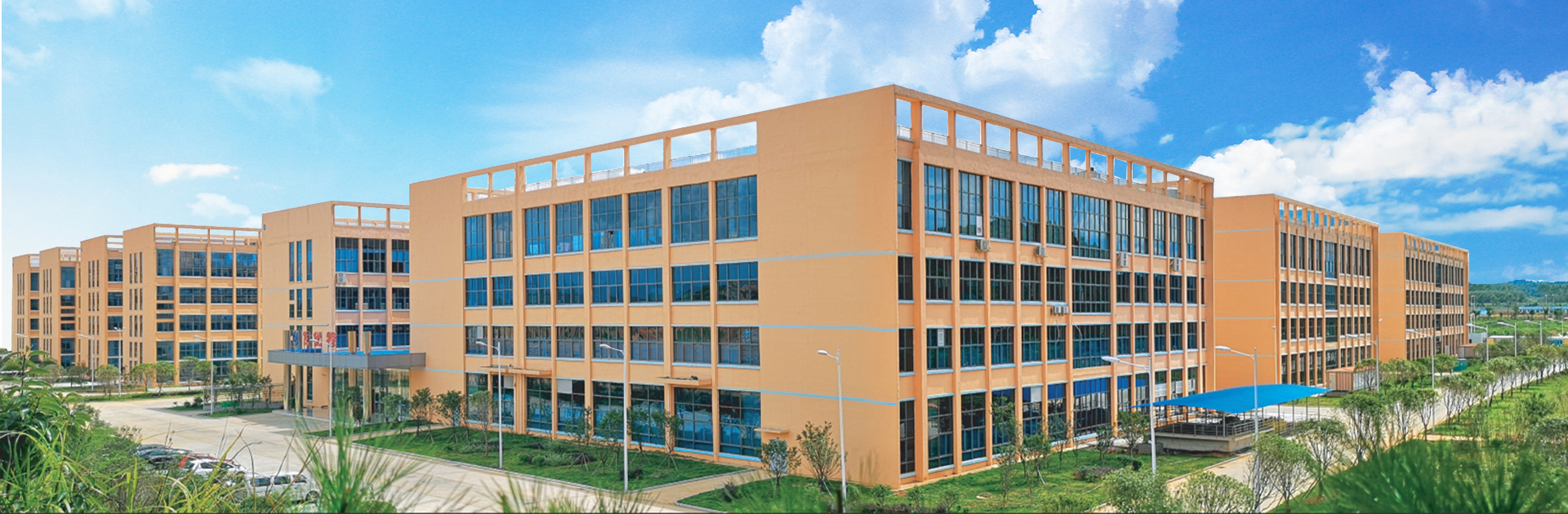
Future operates its own LCD manufacturing and module-related production facilities. Its public factory information includes LCD processes, LCM manufacturing, TFT LCM production, COG/FOG equipment, automatic backlight assembly and laminating equipment.
From Panel Selection to Module Manufacturing
A simplified project workflow
Panel Selection
Match available panel resources to the technical specification.
Module Engineering
Review FPC, driver, backlight, interface and structure.
Manufacturing
Apply the approved process and module configuration.
Verification
Perform the agreed inspection and reliability evaluations.
Delivery
Manage approved specifications and repeat orders.
For equipment manufacturers, these downstream activities affect whether a technically suitable panel becomes a module that can actually be installed and used.
You can see examples of our manufacturing equipment and reliability facilities on our LCD and LCM factory workshops page.
Small-Batch and Multi-Model Projects Need a Different Conversation
A company developing industrial instruments may require several display configurations across its product range.
One device needs a monochrome LCD.
Another requires a compact TFT module.
A newer model needs a touch display with customized cover glass.
Each version may have different mechanical dimensions, interfaces and annual demand.
These requirements create a sourcing challenge that differs from purchasing a standardized display for a very high-volume consumer product.
For such projects, it may be useful to evaluate existing panel platforms before considering new tooling.
However, low-volume customization is not automatically economical. The achievable MOQ, development cost and unit price depend on material availability, tooling requirements, panel sourcing and the final configuration.
The practical question is not simply whether a supplier advertises a low MOQ.
It is whether the supplier can explain a technically feasible and commercially sustainable route from sampling to repeat production.
Future’s internal business documentation specifically identifies small-batch, multi-model manufacturing as part of its approach to specialized markets.
The Questions Worth Asking Before Choosing an LCD Supplier
Factory ownership should be one part of supplier qualification, not the entire evaluation.
Before approving a display partner, it is useful to understand how the supplier handles panel sourcing, engineering and ongoing production.
|
Question |
Why it matters |
|---|---|
|
Who manufactures the selected TFT panel? |
Clarifies the upstream supply arrangement. |
|
Which processes are performed by your own factory? |
Defines manufacturing responsibility. |
|
Can you offer alternative panel options? |
Helps assess sourcing flexibility. |
|
What happens if the original panel is discontinued? |
Reveals the supply-continuity process. |
|
Can the FPC and interface be modified? |
Determines integration flexibility. |
|
How are component changes approved? |
Helps prevent unauthorized substitutions. |
|
Which tests apply to this module? |
Clarifies the actual validation scope. |
|
Can you support samples and repeat orders? |
Connects development planning with production. |
A clear supplier should be able to explain these boundaries without treating every capability as an in-house process.
Transparency matters.
If an upstream component is sourced externally, that should be clear.
If a test requires project-specific conditions, those conditions should be agreed upon.
If a component substitution requires requalification, the supplier should communicate that requirement rather than promising a seamless replacement.
This is how flexible sourcing becomes a managed manufacturing solution instead of an additional source of uncertainty.
Conclusion: The Right Question Is About Capability, Not Ownership Alone
An LCD panel factory can be a valuable supplier for many projects.
An experienced LCD module manufacturer with access to multiple panel resources can also provide a practical solution, particularly when the project requires specialized configurations, engineering integration or multiple product variants.
The right sourcing model depends on the actual requirements.
What matters is whether the supplier can explain its manufacturing responsibilities, select a suitable panel, integrate the required module components, manage changes and support the approved product through production.
At Future, our approach is to combine available panel resources with LCD and module manufacturing, engineering cooperation and project-specific customization.
Before committing to a completely new display design, it is worth checking whether an existing panel and module platform can already meet your requirements.
You may not need a supplier that owns every upstream process. You need a supplier that can clearly explain how your display will be sourced, manufactured, verified and supplied.
Have a display specification or an existing module you need to replace?
Send us your current datasheet, mechanical drawing or project requirements.
Include the target display size, resolution, interface, application, operating conditions and estimated annual demand. If you need FPC, backlight, touch or cover-glass customization, let us know which parameters must remain unchanged.
Our team can review available display platforms and discuss the manufacturing and customization options for your project.
Send Your LCD Project Requirements
Post time: Sep-20-2026


