
One Industrial Display. Many Engineering Decisions.
You’re developing a new industrial HMI. The screen size looks right, the display image is clear, and the initial sample fits your budget.
But will the LCD interface match your controller? Can the touch panel work in your enclosure? And what happens when the equipment operates for extended periods?
Choosing an industrial TFT LCD display is about more than screen size.
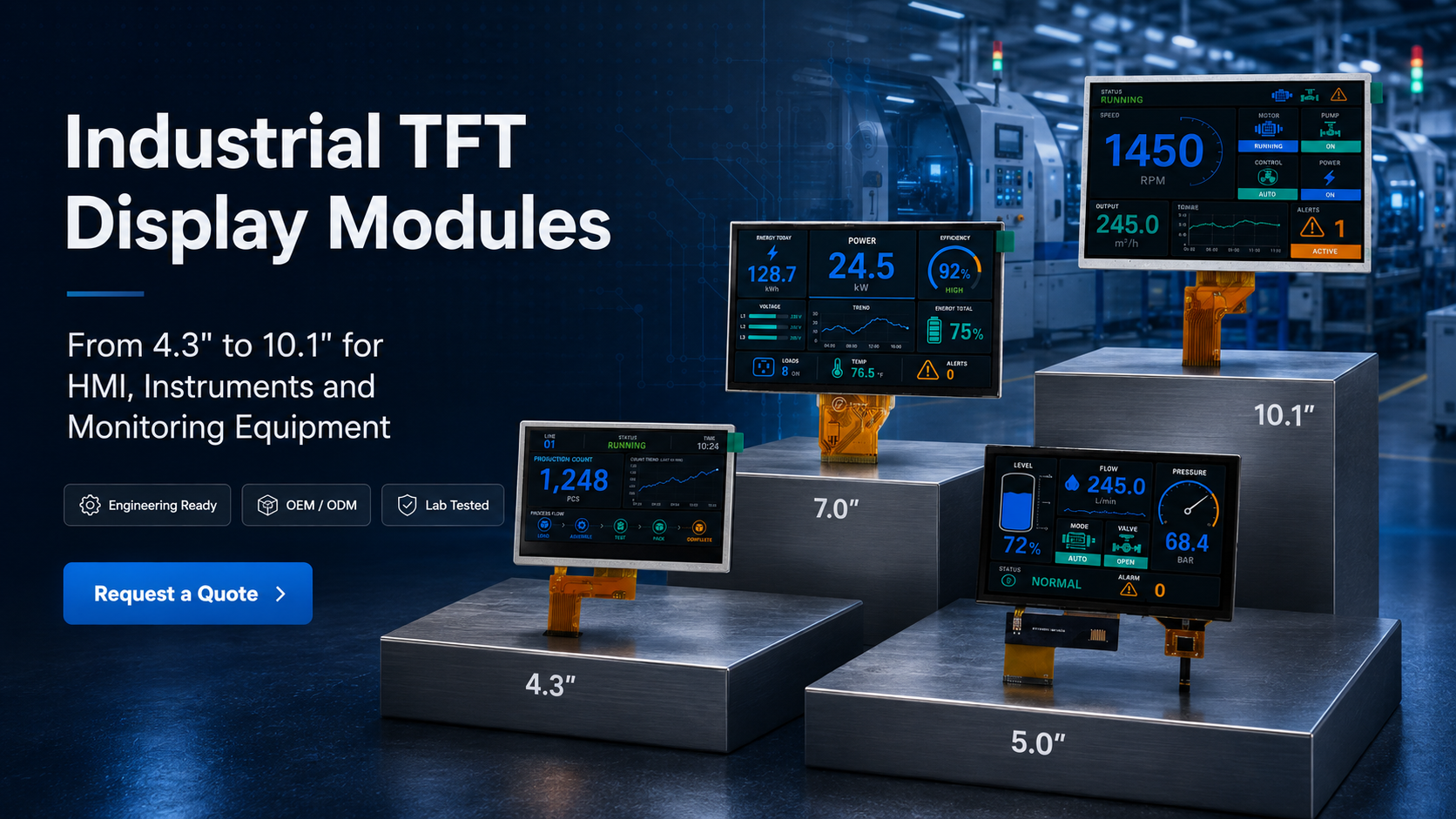
Future Display offers industrial TFT module options from 4.3 inches to 10.1 inches for control panels, instruments and monitoring equipment.
01 | Which TFT LCD Size Fits Your Equipment?
Different industrial products need different display formats.
| Size | Potential Applications | Selection Focus |
|---|---|---|
| 4.3 Inch | Compact HMI, instrument panels | Space, resolution, touch input |
| 5.0 Inch | Machine controls, embedded devices | Interface, FPC, enclosure fit |
| 7.0 Inch | Process monitoring, graphical HMI | UI layout, brightness, viewing angle |
| 10.1 Inch | Equipment dashboards, monitoring systems | Display area, mounting, power |
These are possible application directions, not fixed specifications for every size.
Each project should begin with the intended interface layout, available installation space and required operating conditions.
02 | Display Interface: Check More Than Resolution
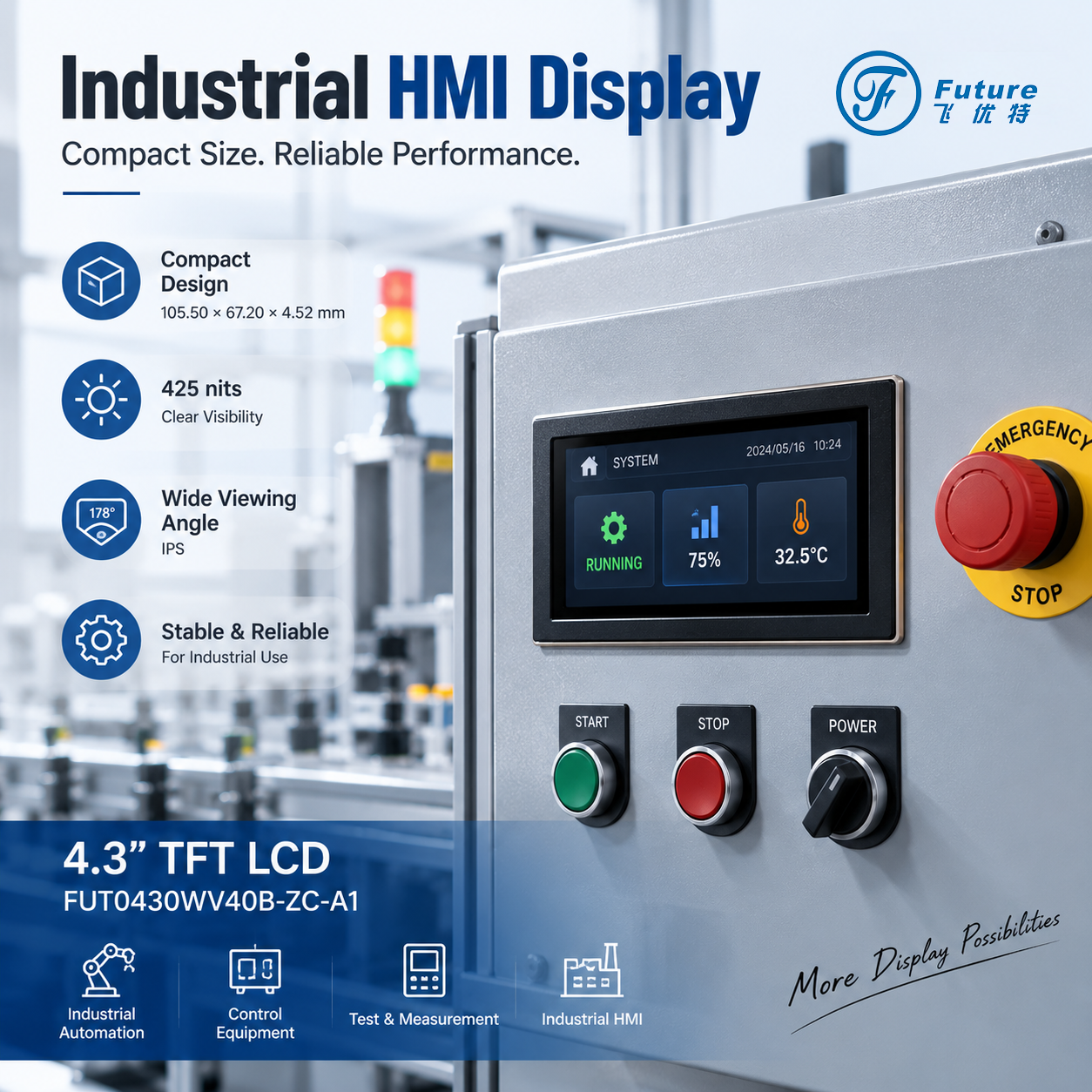
A TFT LCD may use RGB, MIPI, LVDS or another interface depending on the selected model.
Even two displays with the same resolution may have different connector pinouts, voltage requirements and signal timing.
Before replacing or selecting a display, engineers should confirm:
- Display interface and bit depth
- Supported signal timing
- Supply voltage and backlight requirements
- FPC pin assignment and connector orientation
- Host processor compatibility
Engineering Tip: Matching the screen size is not enough to guarantee plug-and-play compatibility.
03 | IPS, Brightness and Viewing Conditions
Industrial operators may view equipment from different positions, especially when a display is mounted on a vertical or angled control panel.
IPS TFT technology can help maintain consistent image appearance over wider viewing angles.
However, IPS alone does not guarantee sunlight readability or a specific operating temperature range.
For the selected module, consider brightness, contrast, reflection, viewing angle and the final cover-glass assembly.
A typical indoor HMI may have different optical requirements from a machine display installed near windows or outdoors.
04 | Touchscreen and Cover Glass Integration
Many industrial control interfaces require touch input.
Projected capacitive touch (PCAP) and resistive touch (RTP) serve different operating needs.
PCAP may support multi-touch interaction, while resistive touch can be suitable for pressure-based operation with gloves or a stylus.
Cover-glass thickness, FPC routing and bonding structure can also affect integration.
For suitable projects, Future Display can review customized touch panels, cover glass and optical bonding options.
05 | Reliability: What Should Purchasing Teams Ask?
Industrial displays often operate for long periods inside machines and control systems.
Product evaluation should therefore include more than a successful initial demonstration.
Depending on the application, engineers may request:
- High- and low-temperature operation testing
- Humidity evaluation
- Thermal cycling or thermal shock
- Vibration-related evaluation
- ESD requirements
- Visual inspection and display uniformity checks
Test conditions and acceptance criteria should be reviewed for the specific display model and customer project.
06 | Future Display Industrial LCD Solutions
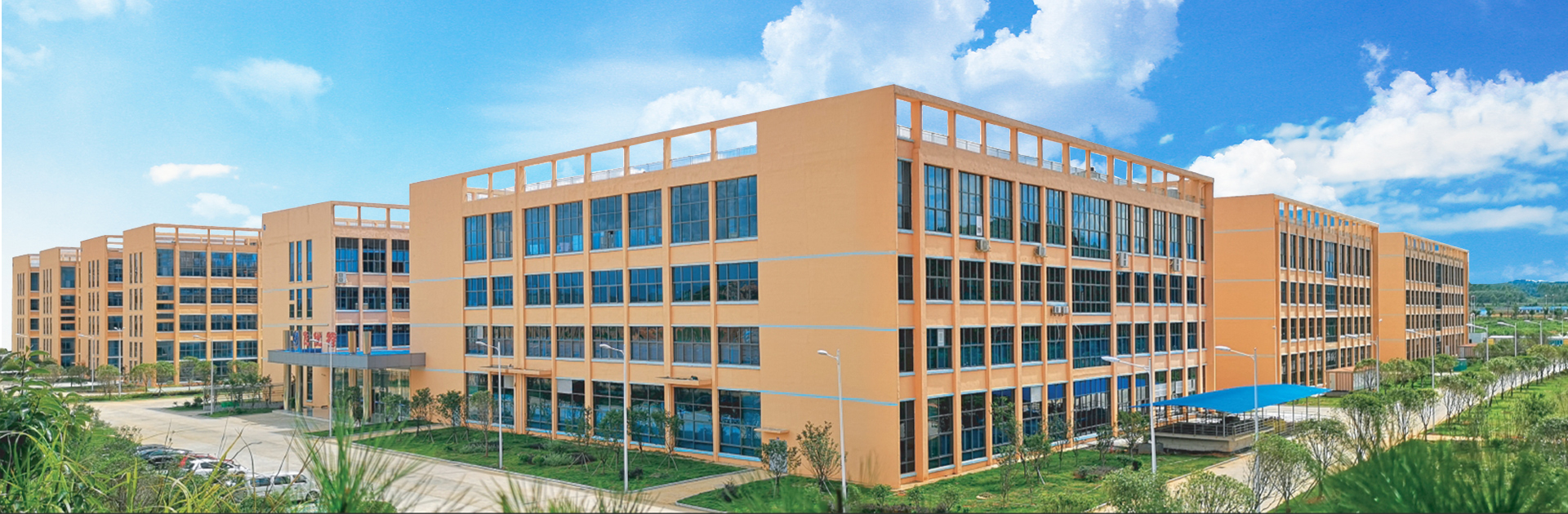
Hunan Future Electronics Technology Co., Ltd. manufactures TFT LCD and monochrome display modules for industrial and embedded applications.
Our industrial display range includes 4.3, 5.0, 7.0 and 10.1-inch platforms that can be evaluated for different equipment designs.
Depending on the selected module, customization options may include touch integration, cover glass, FPC, backlight and optical bonding.
Explore our industrial display module solutions.
07 | Frequently Asked Questions
Which TFT LCD size is best for an industrial HMI?
It depends on the available enclosure space, user interface complexity and viewing requirements. Compact controllers may use 4.3 or 5-inch modules, while larger interfaces may benefit from 7 or 10.1-inch options.
Can an RGB TFT LCD replace a MIPI display?
Not directly. RGB and MIPI use different electrical and communication architectures. Controller compatibility must be evaluated.
Is IPS necessary for every industrial device?
No. IPS is useful when wide viewing angles are important, but the final choice depends on optical and application requirements.
Can industrial TFT LCD modules include touchscreens?
Yes. Compatible models may support capacitive or resistive touch configurations. Touch type and integration should be confirmed for the selected platform.
Can Future Display customize an industrial TFT LCD?
Future Display can review FPC, touch, cover glass, interface and backlight requirements. Final feasibility depends on the module and engineering review.
08 | Test Your Knowledge: Industrial TFT Selection
Select an answer, then open the explanation to check your understanding.
Question 1: Two TFT LCDs have the same size and resolution. Are they automatically interchangeable?
A. Yes, always
B. No, interfaces, pinouts and timing may differ
Show Answer
Correct Answer: B. Electrical and mechanical compatibility must be confirmed.
Question 2: Does IPS automatically guarantee outdoor readability?
A. Yes
B. No, brightness and reflections also matter
Show Answer
Correct Answer: B. Viewing angle and sunlight readability are different considerations.
Question 3: What should a manufacturer include in an LCD RFQ?
A. Only the screen size
B. Display size, interface, environment, drawings and quantity
Show Answer
Correct Answer: B. Complete requirements help evaluate technical and manufacturing feasibility.
09 | RFQ: Request an Industrial TFT LCD Quote
Developing a new control panel or searching for a compatible LCD module?
Industrial TFT LCD RFQ Checklist
1. Application: Industrial HMI / Instrument / Monitoring / Other
2. Display Size: 4.3 / 5.0 / 7.0 / 10.1 Inch / Other
3. Resolution: Required pixel resolution
4. Interface: RGB / MIPI / LVDS / Other
5. Brightness: Required luminance and lighting conditions
6. Touch: PCAP / RTP / None
7. Mechanical Design: Outline, FPC and connector requirements
8. Operating Conditions: Temperature, humidity and installation details
9. Reliability: Required tests and acceptance criteria
10. Purchasing: Sample quantity, annual volume and project schedule
Attachments: Datasheet, CAD drawing or reference photographs
Request Engineering Review & Quotation
Email:
info@futurelcd.com
Online Inquiry:
Contact Future Display
Share your project requirements and let’s evaluate a suitable display configuration.
Conclusion: Start with the Equipment, Not Just the Screen
The right industrial TFT LCD should match the equipment’s interface, mechanical design, viewing conditions and reliability requirements.
Whether your project needs a compact 4.3-inch HMI or a larger 10.1-inch monitoring display, defining these requirements early can make display selection more efficient.
Future Display | Industrial LCD & OEM/ODM Display Solutions
Post time: Nov-11-2026


